Sleep science and nursery safety
Quiet Nursery Sleep: Choosing an Organic Crib Mattress
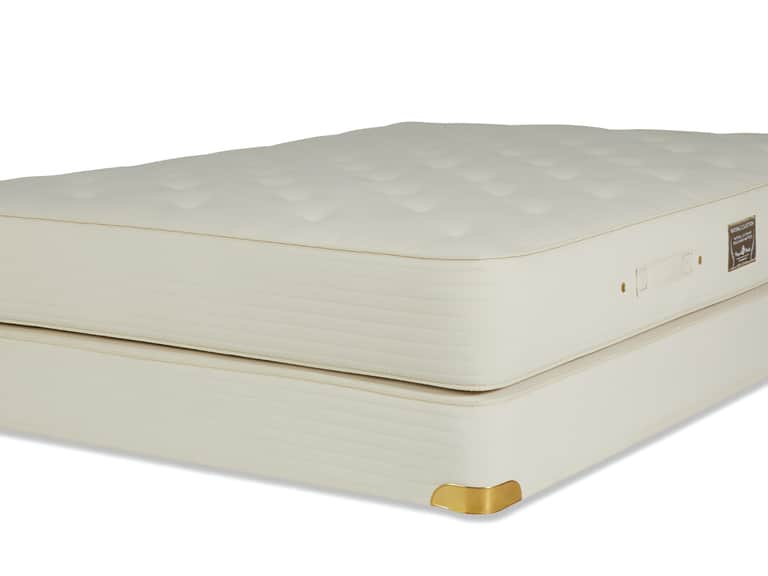
In a nursery, quiet can feel like a small kind of shelter. Yet a calm room begins not with silence, but with a safe sleep space: a firm, flat mattress that fits the crib precisely. Organic materials may matter to families choosing bedding, but labels and fabric claims should never outrank fit, construction, and current safe-sleep guidance.
Published November 4, 2026
A nursery at night is a landscape of faint sounds. The house settles; heating pipes tick; a floorboard answers a change in temperature. Sometimes a mattress seems to squeak when a baby shifts, though the sound may come from a crib joint, a slat, or a nearby object brushing the frame. Finding the source can make the room feel more peaceful, but the investigation must preserve the most important feature of the sleep space: a safe, correctly fitted surface.
Choosing among organic crib mattresses can involve unfamiliar terms, from certified fibers to foam construction and waterproof covers. It can also raise practical questions: How snug should a mattress fit? What does “organic” actually describe? Can a mattress make noise? This guide offers a way to assess those questions without losing sight of the essentials. For an infant, use a firm, flat mattress designed for the specific crib, covered only with a fitted sheet, and follow the latest recommendations from your pediatrician and recognized safe-sleep authorities.
Start with safe sleep, not silence
A quiet nursery may be soothing for caregivers, but sound reduction is not a substitute for safe sleep. Public-health guidance commonly advises placing babies on their backs for sleep, on a firm, flat surface intended for infant sleep, with no loose bedding or soft objects in the sleep space. A fitted sheet should fit the mattress, and the mattress should be used with a crib or other sleep product according to its manufacturer’s instructions.
Do not add a topper, pillow, quilt, positioner, or extra pad to soften, level, or quiet the surface. Even a well-intentioned layer can change how the sleep surface behaves or create gaps and loose material. Avoid improvising with towels, folded blankets, wedges, or foam. If a mattress seems uneven, too soft, damaged, or incompatible with the crib, stop using that setup and consult the crib and mattress manufacturers or a qualified health professional.
Guidance can be updated, and recommendations vary by location. Families should consult current advice from their national health authority, pediatrician, and relevant product-safety regulator. The principles are consistent: use an approved sleep space as directed, keep it uncluttered, and do not modify the mattress or crib to solve a noise problem.
What “organic” can—and cannot—tell you
Organic is a useful starting point for asking about materials, but it is not a complete safety description. The word may refer to one component, such as cotton in a cover, rather than every part of the mattress. A mattress can contain several layers: a core, padding, fabric, seams, adhesives, coatings, and a waterproof barrier. Read the scope of any certification or claim carefully, and check which specific materials it covers.
Look for the name of the certifying organization, the standard used, and a way to verify the claim. Different certifications address different questions. Some focus on whether agricultural fibers were produced under defined organic standards; others assess chemical emissions, material content, or manufacturing processes. These standards are not interchangeable, and a certificate for fabric does not automatically certify the foam, core, or finished mattress.
Ask for precise information rather than relying on broad phrases such as “natural,” “green,” or “chemical-free.” Those terms can be ambiguous. Useful questions include: Which components are certified? Is the certification current? Does it apply to the finished product or only to a material? What is the core made from? Are there instructions for airing, cleaning, or disposal? A clear answer helps families compare products on evidence rather than atmosphere.
Organic materials do not make a mattress automatically suitable for an infant. A mattress must be intended for crib use, meet the safety requirements applicable where it is sold, and fit the exact crib model and size. A product described as natural or organic may still be too soft, too thick, damaged, or incorrectly sized for a particular crib. Materials matter, but intended use and safe construction come first.
Understand construction and firmness
Crib mattresses may use different cores and surface materials. Some rely on foam; others use coils or alternative constructions. The outside may include cotton, wool, or a waterproof layer. These materials influence weight, feel, cleaning, and airflow through the product, but a caregiver should not judge infant suitability by pressing a showroom display or comparing softness by hand alone. Choose a mattress specifically designed for the crib and infant sleep, and follow its stated use and care instructions.
For infant sleep, the surface should be firm and flat. Firmness is not simply a matter of personal preference or a claim about comfort. It is a safety feature. A mattress that feels plush, deeply contoured, or easy to indent may not be appropriate, even if it uses premium or organic materials. Avoid using a mattress intended for an adult bed, a play surface, or another purpose in a crib unless the manufacturer explicitly identifies it as suitable for that exact use.
Waterproof layers can make routine cleanup easier, while removable covers may seem convenient. Before purchasing, determine whether the cover is meant to stay on during sleep, whether it can be washed, and whether removing it changes the product’s safety or warranty conditions. Do not add a second cover or protector unless the mattress and crib instructions permit it and it fits securely. The sleep surface should remain flat and stable, without loose fabric or bunching.
The importance of a snug crib mattress fit
Fit is one of the simplest things to overlook because a mattress may appear to sit neatly inside a crib while still leaving a hazardous gap. The mattress should be the correct size and type for the crib, lie flat, and remain stable. Follow the crib manufacturer’s instructions and any applicable safety standards rather than relying on a generic rule of thumb or an online measurement that may not apply to your model.
Check the crib’s model label and manual, then confirm that the mattress is approved or sized for that crib. Cribs and mattresses are not universally interchangeable. Measure only as directed by the manufacturer, and inspect along every side and corner after placing the mattress in the frame. The mattress should not bow, tilt, or shift when pressed gently. There should be no visible opening that allows the mattress to pull away from the crib sides.
Fit can change if the mattress is replaced, the crib is adjusted, or the structure is assembled differently. Recheck after moving the crib, changing mattress height settings, or taking the frame apart for cleaning or relocation. Use the crib’s designated mattress support and hardware; never insert shims or padding to fill a gap. If the fit is uncertain, do not guess. Contact the manufacturers with the model numbers and ask for confirmation.
A snug fit also helps with noise diagnosis. A mattress that moves against the frame may create rubbing or tapping, but the answer is not to wedge it in place with fabric or add a loose bumper. If the mattress is the wrong size or seems unstable, replace it with one specified for the crib rather than trying to silence the movement.
Where mattress noise may come from
A sound heard during a baby’s movement can seem to travel from the mattress, but a crib is a connected structure. Pressure on one part can transmit vibration through the frame. A squeak may come from a loose or misaligned fastener; a short click might come from a support resting imperfectly in its bracket. Nearby furniture, a wall, a monitor cord, or an object touching the crib can also make a sound when the frame shifts slightly.
Begin with a visual inspection while the crib is empty. Check that the mattress is seated evenly, the support platform is in the correct position, and the crib is assembled according to its manual. Look for missing parts, loose hardware, cracks, bent supports, or signs that the crib has been altered. Do not tighten or replace components contrary to the manufacturer’s directions, and do not use unapproved lubricants, tape, or improvised fasteners. If anything looks damaged or the sound persists, contact the manufacturer before using the crib again.
Next, consider the room around the crib. A nightstand touching a rail, a mobile or toy brushing the frame, or a cord pulled taut across nearby furniture may produce intermittent noise. Keep objects and cords out of the sleep space and follow product instructions for anything installed near the crib. The goal is not to make a nursery acoustically sealed; it is to remove avoidable contact and ensure the crib remains correctly assembled and unobstructed.
If the source cannot be identified, do not repeatedly load or shake the crib with a baby inside. Inspect it without the child present, following the manufacturer’s instructions. A persistent squeak may be merely irritating, but a structural problem deserves attention. When in doubt, pause use of the crib and seek guidance from the manufacturer or an appropriate product-safety authority.
A practical checklist for choosing organic crib mattresses
Use this checklist to compare options calmly. It is not a substitute for safety standards or professional advice, but it can help organize the questions that matter before purchase.
- Confirm intended use: The product should be specifically designed for infant sleep and compatible with the crib in question.
- Check the fit: Verify model and size information with the crib and mattress instructions. The mattress should sit flat and securely without gaps or instability.
- Prioritize a firm, flat surface: Do not choose a soft or deeply cushioned mattress to address comfort, warmth, or noise concerns.
- Read the material claims closely: Identify what is organic, what is certified, and which layers or components the certification covers.
- Review safety information: Look for applicable compliance details, manufacturer contact information, product identification, and recall information relevant to your region.
- Understand the care instructions: Learn how to clean the surface, whether a cover is removable, and what to do after a spill or other contamination.
- Inspect condition: Avoid mattresses that are torn, sagging, visibly damaged, or missing essential labels and instructions.
- Keep the sleep space simple: Use only the mattress and a properly fitted sheet, unless current local guidance and the product instructions say otherwise.
Price, weight, and ease of handling may matter to a household, but they should be considered after suitability and fit. An organic label is not a reason to overlook a poor match with the crib, and a heavier or more elaborate construction is not automatically safer. The best choice is the one that meets relevant standards, fits correctly, and can be used and maintained as directed.
Care, moisture, and everyday inspection
Care begins with the product label. Some mattresses are designed to be wiped clean; others have specific instructions for the cover or surface. Do not soak a core, apply household chemicals, or use a cleaning method the manufacturer prohibits. Strong fragrances and unapproved sprays are not necessary for routine care. If a mattress becomes wet or contaminated, follow the instructions for cleaning and drying it fully before use. Replace it if damage or persistent odor suggests that it can no longer be used as intended.
Inspect periodically for sagging, tears, exposed materials, damaged seams, or changes in shape. Check that the crib remains stable and that hardware has not loosened. A waterproof surface may be practical, but it does not remove the need to check condition or follow safe-sleep practices. Nor should a caregiver add layers simply because the mattress feels cool or firm; use appropriate clothing and follow pediatric guidance for room temperature and sleepwear.
Mattress care can help preserve function, but it cannot repair a defective product. Follow the manufacturer’s warranty and recall notices, and keep the model and purchase details where they can be found. If the mattress has been handed down, verify its history and condition. A product with unknown damage, missing instructions, or uncertain compatibility is a poor candidate for a safety-critical sleep space.
Making the room calmer without changing the sleep surface
Not every nursery sound can or should be eliminated. A home has its own nighttime acoustics: air moving through a vent, distant traffic, a radiator cooling. Caregivers can reduce avoidable disturbances by ensuring furniture does not touch the crib and by keeping doors, drawers, and loose objects from knocking against it. If using a sound machine, follow its instructions, place it well away from the crib, and keep cords out of reach. Ask a pediatric professional about appropriate use and volume, especially for a young infant.
Room arrangement can also make nighttime care easier. Keep the path to the crib clear, store supplies within an adult’s reach but outside the sleep space, and ensure that cords from monitors or lamps cannot reach the crib. A calm visual environment need not be elaborate. The most useful nursery is one in which the sleep area is easy to inspect, the crib is correctly assembled, and caregivers can respond without moving or modifying the mattress.
When noise occurs, take a measured approach: notice when it happens, inspect the empty crib, check nearby contact points, and consult the instructions. Avoid placing a phone, recorder, or other device in the crib to investigate. The aim is to distinguish ordinary household sounds from signs of a fit or structural issue while keeping the baby’s sleep environment unchanged and safe.
A quieter decision, grounded in evidence
Choosing an organic crib mattress is ultimately an exercise in careful reading. Material certifications can clarify sourcing or manufacturing claims; construction details can explain how a product is made; care instructions can guide everyday use. None of these replaces the basics: a mattress designed for the crib, a firm and flat surface, a close and stable fit, and an uncluttered sleep space.
Noise is worth investigating, but it should not prompt an improvised fix. A squeak may come from the frame rather than the mattress, and a mattress that shifts or leaves a gap should be treated as a compatibility concern—not a puzzle to solve with padding. Check the crib and mattress documentation, contact manufacturers when details are unclear, and use current safe-sleep guidance as the final reference.
In a nursery, peace is not measured only by the absence of sound. It also comes from knowing that the sleep space is assembled as intended, the mattress fits, and every layer has a clear purpose. With those foundations in place, the room can remain simple: a firm surface, a fitted sheet, and the quiet confidence of a setup that puts safety first.
Quick takeaways
- Choose a firm, flat crib mattress intended for the specific crib, and follow current local safe-sleep guidance.
- Verify a snug, stable fit using the crib and mattress manufacturers’ instructions; never fill gaps with padding.
- Read organic and certification claims component by component. Organic materials alone do not establish infant-sleep suitability.
- If a mattress or crib squeaks, inspect the empty crib and nearby furnishings without altering the sleep surface.
- Do not add toppers, pillows, loose bedding, or improvised layers to change comfort or reduce noise.