Mattress education · Materials and construction
What to Know Before Choosing an Organic Latex Mattress
Latex begins as a milky sap tapped from rubber trees, but the sleep surface it becomes depends on a chain of choices: how the material is processed, what a certification actually covers, how layers are assembled, and how the finished mattress feels beneath a particular body. Understanding those details can make the difference between choosing by label and choosing with confidence.
Start with the material, not the label
In mattress descriptions, “latex” generally refers to a resilient material made from natural rubber, synthetic rubber, or a blend. Natural latex is derived from the sap of the rubber tree, Hevea brasiliensis. The sap is collected and processed into foam, creating a springy structure that compresses under weight and rebounds when pressure lifts. That responsiveness is one reason latex feels different from many memory foams: instead of slowly settling around the body, it tends to push back more promptly.
“Organic latex,” however, is not a complete description of a mattress. It may refer to latex certified to an organic standard, but the phrase alone does not tell you which layers are included, what proportion is natural, or whether the cover, adhesives, fire barrier, and other components meet the same criteria. A mattress can contain a certified organic latex core and still include other materials that are not organic. The useful question is not simply whether a product uses the term. It is: what exactly is certified, by whom, and to which standard?
That distinction matters because a mattress is an assembled object. Its feel and composition come from multiple elements: the comfort layer nearest the sleeper, the support core underneath, any transition layers, the quilted cover, and the materials used to join or enclose them. Looking at those parts separately gives a clearer picture than relying on a single headline claim.
How latex becomes a mattress layer
Natural latex foam is commonly made using one of two processes: Dunlop or Talalay. Both begin with liquid latex, but the manufacturing steps differ, and the resulting foam can have different characteristics. Neither process, by itself, guarantees that a mattress is better, more durable, or more suitable for a particular sleeper. Construction details and the overall design matter at least as much.
Dunlop: a simpler route from liquid to foam
In the Dunlop process, latex is whipped into a foam, poured into a mold, heated to set, and then washed and dried. The foam may have a slightly varied density through its depth because particles can settle during processing. In practice, Dunlop latex is often described as sturdy or buoyant, but those words are not universal performance guarantees. A specific layer’s firmness, thickness, and formulation shape its feel.
Talalay: additional steps for a different structure
Talalay production involves filling a mold only partway, drawing the mixture into a more uniform distribution through a vacuum step, freezing it, and then heating it to set. The process can create a more consistent cellular structure. Talalay layers are often described as lighter or more uniform, yet the sensation depends on the particular firmness and how the layer is used in the mattress. A soft Talalay comfort layer over a firmer core will not feel like a mattress made entirely from soft latex.
These process names are useful starting points, not a substitute for specifications. Ask whether the latex is natural, synthetic, or blended; whether the supplier identifies the process; and what role each latex layer plays. If those details are not provided, a broad label such as “natural latex” cannot fill in the gaps.
Read certifications carefully
Certification can help make material claims more specific, but the word “certified” should prompt another question: certified for what? Different standards examine different things. Some address whether agricultural materials meet organic requirements; others focus on chemical emissions, product safety, or particular materials. A certification for one foam component does not automatically apply to the entire mattress.
Before treating a badge as proof of every environmental or health claim, look for the certifier’s name and the scope of the certification. Confirm that the certificate is current and applies to the exact product or component being discussed. Manufacturers should be able to explain whether the latex is certified, which layers are covered, and what other materials make up the mattress. If a claim is vague, ask for documentation rather than assuming that “organic” means every part is organic.
It is also helpful to separate environmental attributes from performance. An organic designation does not tell you whether the mattress will feel soft or firm, suit your preferred sleep position, manage heat to your liking, or last a particular number of years. Those are different questions that require construction information, clear policies, and, where possible, an opportunity to evaluate the feel.
Construction is the architecture beneath the surface
Imagine a mattress as a small landscape of changing resistance. The top layers meet the body and influence cushioning. Beneath them, transition layers help spread load. The support core provides the deeper foundation. In an all-latex design, those layers may be made from latex at different firmness levels. Other mattresses combine latex with coils or different foams. Each arrangement changes how the mattress yields, rebounds, and distributes pressure.
Layer thickness affects how far a sleeper settles into the surface. Layer firmness affects how much resistance the foam offers. Layer order changes how those sensations combine. A thick, softer upper layer can feel more enveloping than a thin one over the same support core. A firmer lower layer may help limit excessive sink, but comfort remains individual; body shape, weight, and sleeping posture all influence what a person experiences.
Ask for a layer-by-layer description. Useful information includes the material in each layer, its thickness, and, if provided, its firmness or density specification. Find out whether the mattress is one-piece or modular, whether layers can be rearranged or replaced, and whether the cover can be removed. These details help explain not only initial comfort but also how the mattress may be maintained or adjusted later.
Pay attention to the foundation, too. A mattress is designed to work with a certain type of base. A slatted foundation may need slats spaced within a specified distance; a platform or adjustable base may have its own requirements. Check the manufacturer’s guidance before placing a new mattress on an existing frame, since inadequate support can affect the feel and may complicate warranty coverage.
Firmness is a description, not a universal scale
Mattress firmness labels—soft, medium, firm—are convenient shorthand, but they are not perfectly standardized across makers. Two mattresses labeled “medium” can feel noticeably different. Even the same mattress can feel firmer to one person and softer to another because people differ in body weight, shape, sensitivity, and preferred posture.
A useful way to think about firmness is to consider two related experiences. The first is surface comfort: whether the upper layers cushion the shoulders, hips, and other pressure-sensitive areas. The second is support: whether the mattress allows the body to settle without feeling as if it is sagging or forcing an uncomfortable position. A surface can feel plush while still offering a supportive foundation, or feel firm at first contact while creating pressure at the hips or shoulders.
- Side sleepers often need enough cushioning around the shoulder and hip, though the right amount depends on body shape and personal preference.
- Back sleepers may prefer a balance that supports the trunk while allowing the surface to contour modestly.
- Stomach sleepers may be more comfortable with a surface that limits deep sinking around the middle, but individual needs vary.
- Combination sleepers may value ease of movement and a surface that does not feel difficult to change position on.
These are starting points, not rules. Pain, injury, pregnancy, or other health concerns can change comfort needs, and mattress advice cannot replace clinical guidance. If you share a bed, account for both sleepers: one person’s preferred softness may not work for the other. A split firmness or modular system may be worth investigating if the design allows it, but verify how the arrangement affects the mattress’s warranty and support.
Consider temperature and the whole sleep environment
Latex’s open, springy structure is often associated with a less hugging sensation than slow-response memory foam, but no material can guarantee that a sleeper will feel cool. Temperature at night is shaped by more than the core: covers, quilting, sheets, room climate, pajamas, personal physiology, and the amount of heat retained by surrounding bedding all play a part.
Look for clear descriptions of the cover and any comfort layers, and be cautious with absolute promises. Natural fibers such as cotton or wool may be used in covers or other bedding components, but their presence does not make a mattress entirely organic. Nor does a breathable cover automatically make every sleeper comfortable in a warm room. If you tend to sleep hot, ask what materials sit nearest the body and whether the manufacturer has practical cooling information rather than relying only on vague terms such as “temperature balancing.”
A latex mattress may also have a noticeable odor when new. The intensity and duration vary by product and person. Ask the maker what to expect, whether the mattress should be aired before use, and what guidance applies to people who are sensitive to smells. Keep the room ventilated according to the manufacturer’s instructions, and do not assume that an odor alone proves a product is unsafe or, conversely, that a low odor proves a particular certification.
Durability, care, and the terms that matter
Latex is often chosen for its resilience, but material type alone cannot predict how long a complete mattress will remain comfortable. Durability depends on the quality and thickness of its layers, how the mattress is used, the adequacy of the foundation, and the conditions of its warranty. A warranty is not the same as a promise that the mattress will feel unchanged for the full term. Read what counts as a covered defect, what exclusions apply, and whether transport or inspection costs are the owner’s responsibility.
Care instructions deserve equal attention. Some mattresses are not designed to be folded, flipped, or rotated; others may have specific recommendations. Removable covers may have washing restrictions, and latex layers can require careful handling. Follow the manufacturer’s directions rather than applying a generic routine. A mattress protector can help guard against spills and everyday moisture, but check that it fits securely and does not noticeably alter the surface feel.
Before purchasing, review trial or return terms in detail. Find out how long the evaluation period lasts, whether there is a required break-in period, what condition the mattress must be in, and whether fees or pickup arrangements apply. Confirm delivery access, setup requirements, and disposal options for an old mattress. These practical details are part of the decision, not fine print to consider after delivery.
A practical checklist before you decide
When comparing natural latex organic mattresses, use the same questions for each option. Consistent questions make differences easier to see and reduce the influence of polished language.
- What does “organic” refer to in this mattress, and which organization verifies the claim?
- Is the latex natural, synthetic, or blended, and what manufacturing process is used?
- What materials are in the comfort layers, transition layers, core, cover, and fire barrier?
- How thick is each layer, and how does the manufacturer describe its firmness?
- What foundation is required, and can the mattress be used on the frame I already own?
- Does the mattress suit my sleep position, body shape, movement, and temperature preferences?
- Can I try the mattress, and what exactly do the trial, return, and exchange terms require?
- What maintenance is recommended, and what does the warranty cover or exclude?
Write down the answers. A comparison table can reveal that one maker provides detailed component information while another relies on broad claims. It can also show where two mattresses differ in construction even if they share the same firmness label. This approach keeps the choice grounded in evidence that matters to your household.
When a topper may—and may not—help
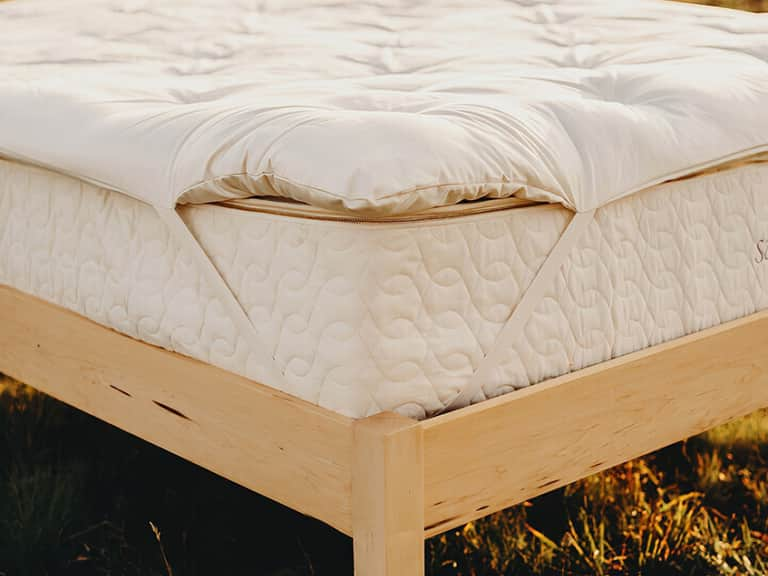
A mattress topper changes the feel at the surface; it does not replace a failing support core. If a mattress is sagging, uneven, or causing persistent discomfort, adding another layer may disguise the problem temporarily without solving it. A topper can be useful when the underlying mattress is structurally sound but feels a little too firm or needs a different surface texture. Its material, thickness, and attachment method determine how much it changes the experience.
For example, wool-filled toppers offer a different kind of surface cushioning from latex. They may be relevant to someone considering how to adjust the feel of a mattress, but they are not latex mattress layers and do not make a mattress organic. Treat each accessory as a separate material choice, and check its care requirements and effect on the surface before combining it with a new mattress.
The choice is personal; the questions can be precise
Choosing an organic latex mattress is part materials research and part self-observation. Notice whether you wake with pressure at the shoulder or hip, whether you feel overheated, and whether you tend to stay in one position or shift through the night. Consider how your current mattress supports you—not only how it feels for a few minutes in a showroom or during a brief test.
Then weigh that experience against what the manufacturer can substantiate: the origin and composition of the latex, the scope of certifications, the layer construction, and the care and return terms. Organic claims describe particular materials and standards; they do not guarantee the right firmness or a perfect night’s sleep. A well-informed choice comes from bringing those questions together.
There is no single mattress that suits every body. But with clear information, a careful reading of construction, and realistic expectations about what labels can tell you, you can narrow the field without being hurried by slogans. The goal is not simply to find a mattress described as natural. It is to understand what lies beneath the cover—and whether that particular design fits the way you rest.
Quick answers
Does “organic latex” mean the whole mattress is organic?
Not necessarily. The phrase may apply to the latex component rather than every layer or material. Check the certificate, its scope, and the full materials list.
Are Dunlop and Talalay the same kind of latex?
They are different manufacturing processes used to make latex foam. The process can affect the foam’s structure, but neither name alone determines whether a mattress will suit you.
How should I choose latex mattress firmness?
Use sleep position, pressure points, body shape, and personal preference as guides. Because firmness labels vary among manufacturers, look for a trial or a way to assess the mattress under realistic conditions.
Can an organic latex mattress help with sleep problems?
A mattress can affect comfort, but it is not a treatment for a sleep disorder or medical condition. Persistent sleep difficulties or pain are best discussed with a qualified health professional.